Tree Trimming & Pruning Across Minnesota
Good pruning keeps trees healthy, protects your roof and siding, and improves curb appeal. We trim to professional standards and never top a tree.
Free estimates. Flat price before work starts. Mon to Fri 6 AM to 5 PM, Sat 8 AM to 12 PM.
What proper pruning does
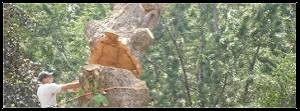
Trimming removes dead and weak wood, thins crowded branches so light and air move through the canopy, and lifts or shortens limbs that scrape roofs, siding, driveways and wires. On young trees, structural pruning guides the framework so the tree stays strong for decades.
We prune for clearance, structure and long-term health. We do not top trees. Cutting a tree back to stubs weakens it, invites decay and usually leads to weak, fast regrowth.
When to trim in Minnesota
Late fall through early spring, while trees are dormant, is the cleanest time for most pruning. You can see the branch structure, the ground is often firm, and fresh cuts are less stressed.
Oaks are the exception. Because of oak wilt, we avoid pruning them in spring and early summer unless a hazard has to be dealt with. Spring-flowering trees are best trimmed right after they bloom, and a storm-damaged limb should be dealt with whenever it happens.
How much we take off
A general rule is to remove no more than about a quarter of a tree live crown in one season. Taking more stresses the tree. If a tree needs more work than that, we phase it over more than one visit and explain why.
Problems pruning fixes, and ones it cannot
Good pruning solves a lot: branches that cross and rub, tight V-shaped unions that can split, dead or broken limbs, a limb scraping the roof, and crowns so dense that wind loads them like a sail. Removing the right branches makes a tree safer and lets it carry less weight in a storm.
It cannot fix a rotten trunk, a lifted root plate or a tree that is mostly dead. If the problem is structural decay, trimming only delays it, and we will say so rather than sell you a trim that will not help. In that case the better call is removal.
Staying safe around trimming work
Trimming goes wrong most often when homeowners climb ladders with a chainsaw, or cut a limb that is bigger than they can control. We work with ropes, rigging and a clear drop zone so cut limbs are lowered, not dropped onto the roof or a fence.
If a branch is touching or near a power line, do not try to cut it. Call your utility first. Lines can be live even when they look dead, and a falling limb can pull them down.
How a tree trimming job works
- Free estimate. We walk the property with you, mark what needs to come off and quote an exact flat price.
- Cut to standard. Each cut is made at the branch collar, with the right rigging so limbs do not damage lawns or roofs.
- Protect the property. We work around landscaping, fences and structures and keep traffic areas clear.
- Clean up. Brush is chipped or hauled away and the area is raked and blown clean.
Tree Trimming FAQs
Do you top trees?
No. Topping damages trees and creates hazards. We reduce and thin using proper pruning cuts instead.
How often should my trees be trimmed?
Young trees benefit from structural pruning in their first years. Mature trees usually need a check every few years, sooner after storms.
Can you trim trees near my roof or power lines?
Yes, we trim for roof, siding and driveway clearance. Branches touching a power line should be left to the utility; call them first.
Is trimming included in the free estimate?
The estimate is free and gives you an exact price for the work we recommend. You decide what to approve.
Related services
Where we do tree trimming
We serve 26 Minnesota communities, including:
Book your tree trimming estimate
Call now. We give you an exact flat price before any work begins.